Goliath Trucking Website
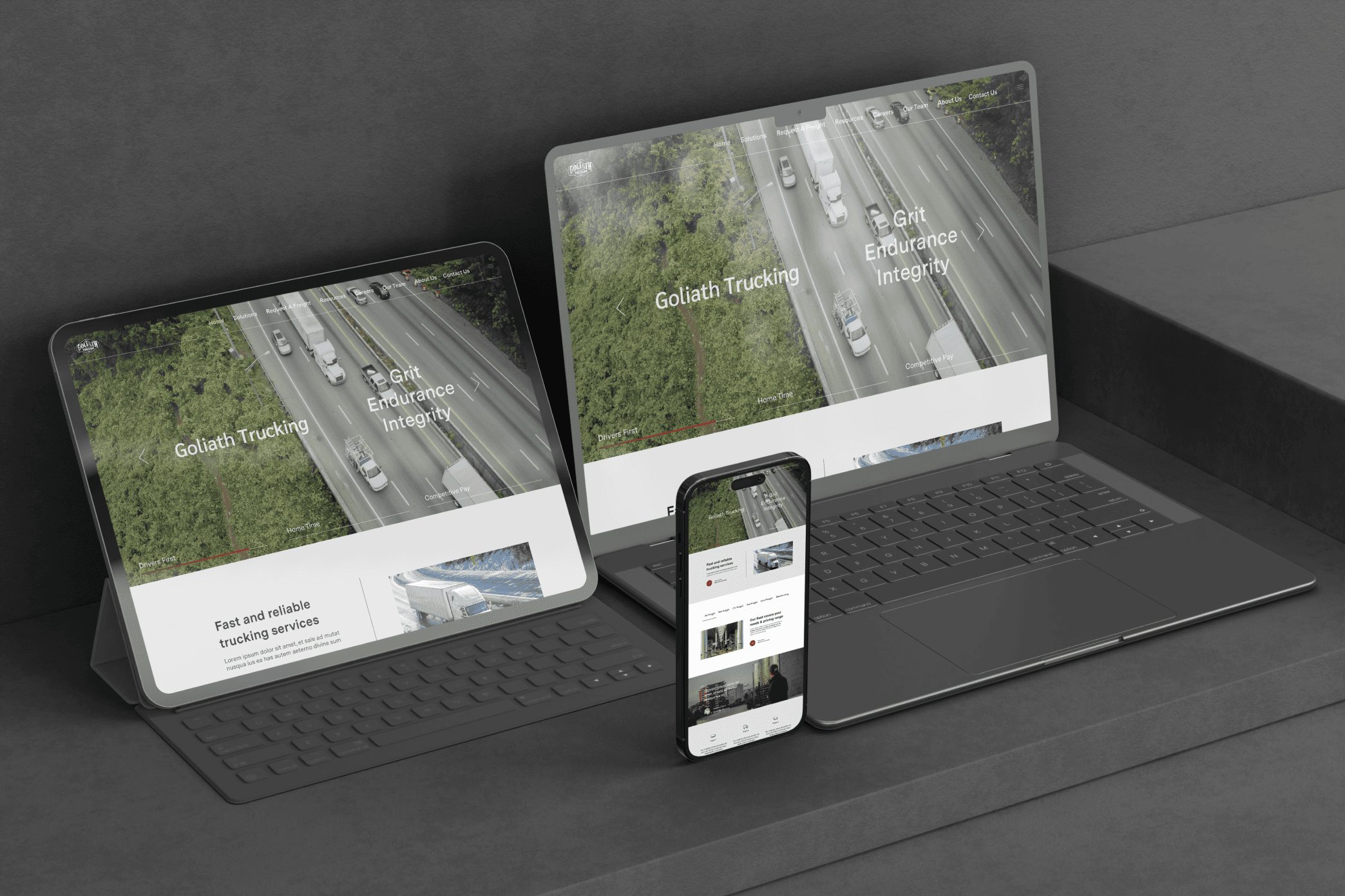
The Goliath Trucking website redesign prioritizes user engagement and conversion optimization. It focuses on revamping the website's visual appeal, streamlining navigation, and improving overall user experience to reduce bounce rates and increase customer leads.
The Challenge
The current Goliath Trucking website suffers from poor user engagement, evident in its high bounce rate. This indicates that visitors find the website unappealing, difficult to navigate, or lacking in immediate value proposition. These factors lead to users quickly abandoning the site.
The redesigned Goliath Trucking website will combat the current high bounce rate with a focus on user-centricity and clarity. A modern, visually engaging overhaul will enhance the website's appeal, while streamlined navigation will guide users effortlessly towards the information they need. Responsive design ensures an optimal experience across all devices. Prominent calls to action will encourage interaction, while performance optimizations ensure fast loading speeds to prevent user frustration. Ultimately, these changes aim to transform the website into a valuable tool for users, leading to increased engagement and conversions.
Process
My design process,
Define: The design process for the Goliath Trucking website began with a thorough assessment of the existing site to identify the root causes of high bounce rates. I discovered several key issues: outdated design, poor navigation, and a lack of clear calls to action. Addressing these problems was critical to improving user engagement and satisfaction.
I established clear objectives for the redesign. The goal was to create a user-centric, visually appealing website that would provide value to visitors and encourage them to stay longer. Understanding the target audience, which primarily consists of businesses seeking reliable trucking services, was essential to tailoring the website’s features and content.
Research: During the research phase, I conducted user interviews and competitive analysis to gain insights into what users expect from a trucking service website. This research helped in identifying best practices and innovative features that could set Goliath Trucking apart from competitors. I also analyzed user behavior on the existing website to understand navigation patterns and common points of friction.
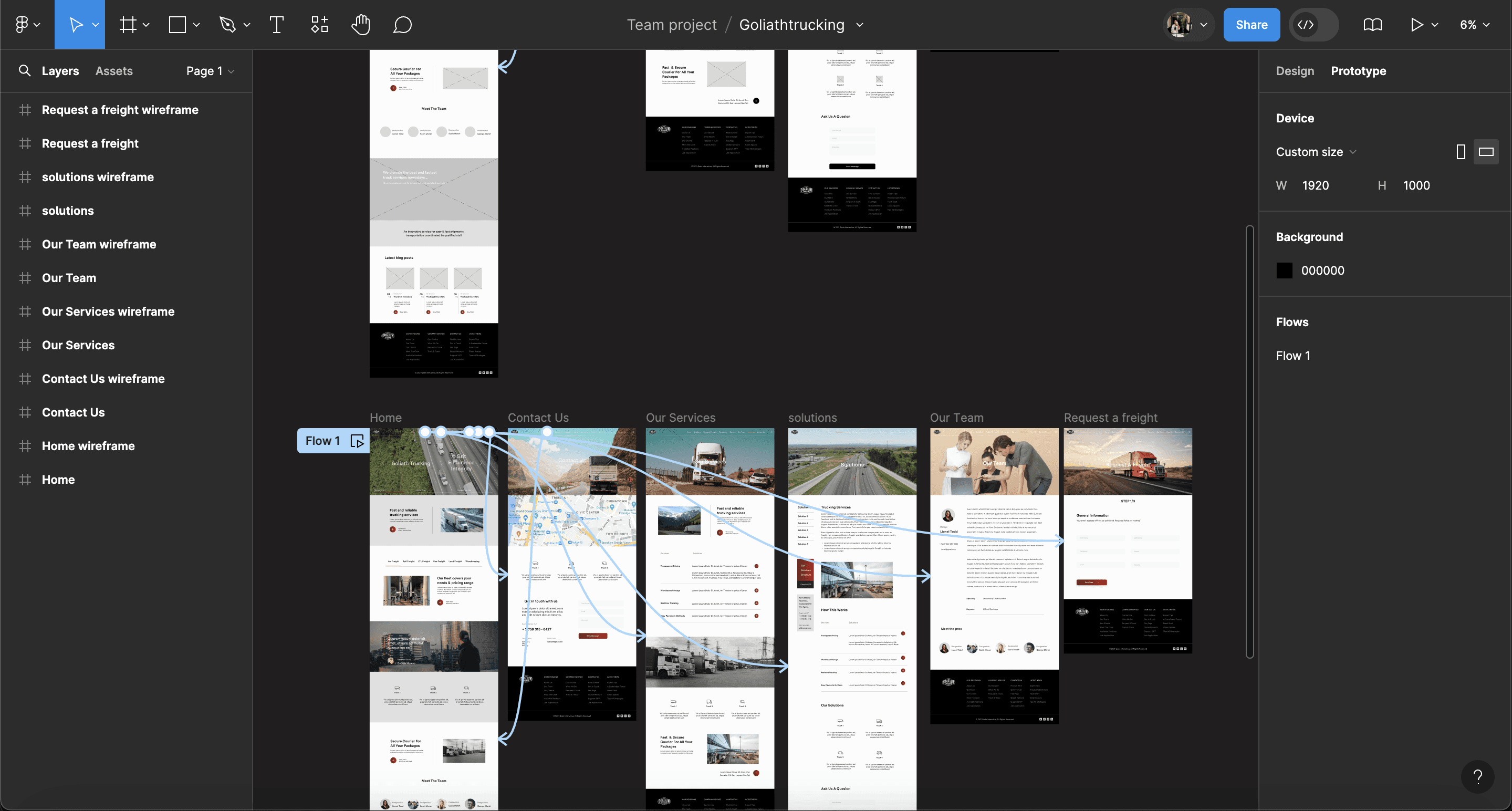
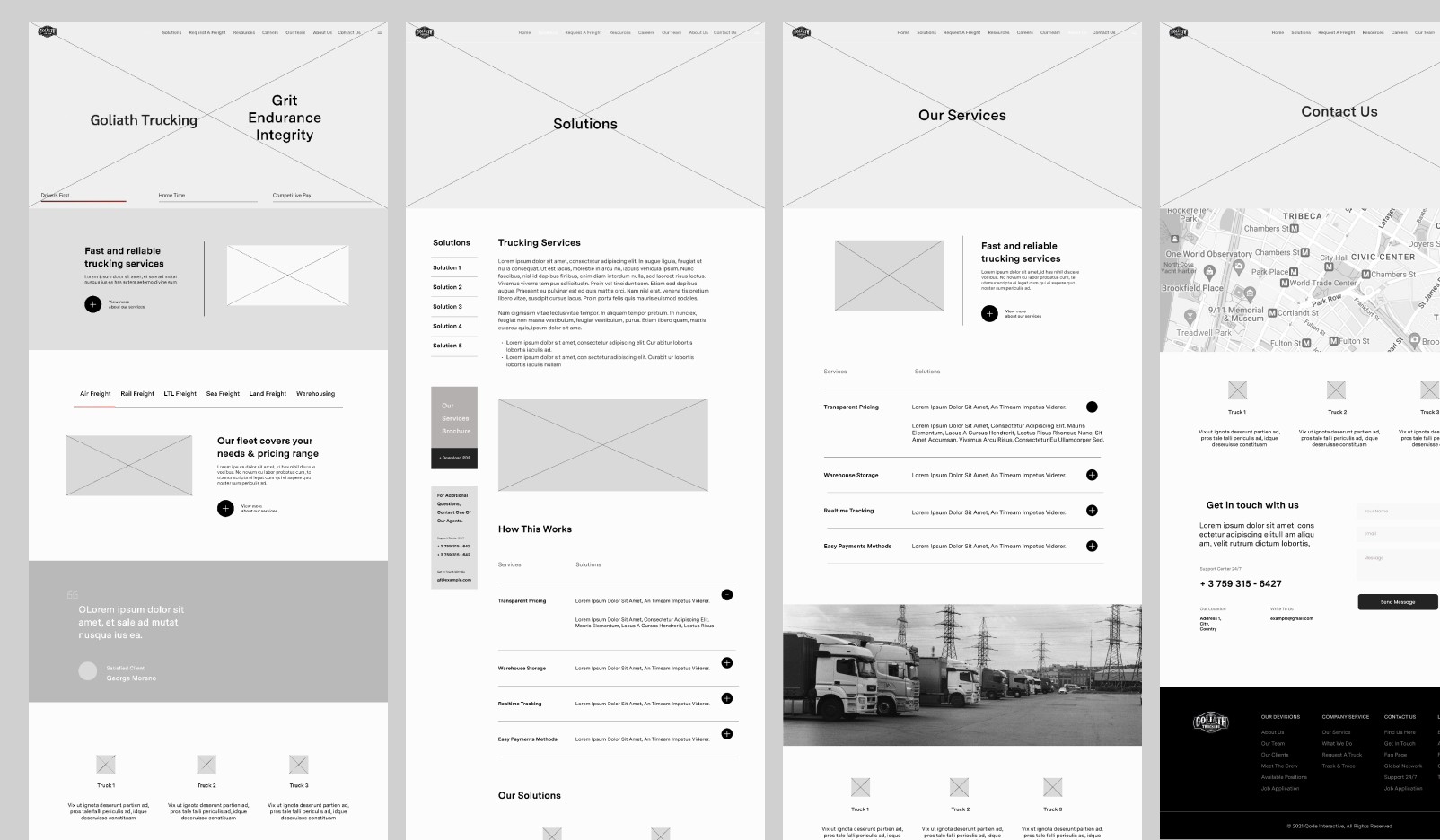
Low fidelity prototyping: In the low-fidelity prototyping stage, I sketched wireframes to outline the new site structure. These wireframes focused on simplifying navigation and prominently featuring essential information such as services, solutions, and contact details. Using Figma, I translated these sketches into interactive wireframes, enabling early feedback and iterative improvements.
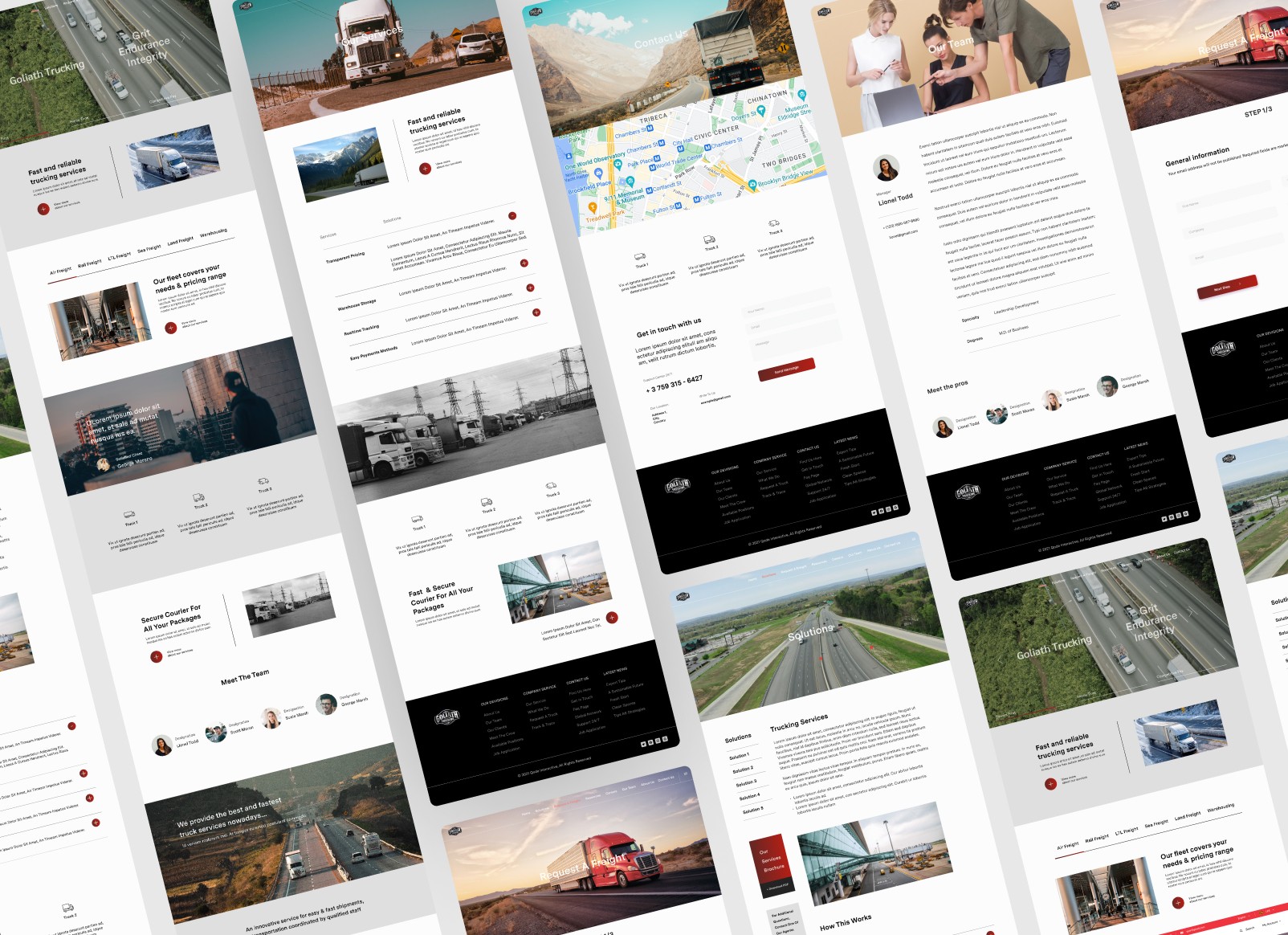
The high-fidelity prototyping: The high-fidelity prototyping phase involved creating detailed designs in Figma. I aimed for a modern, clean aesthetic that would appeal to the target audience. The design incorporated responsive elements to ensure optimal performance on both desktop and mobile devices. Interactive prototypes were then developed to simulate the user experience, allowing for further testing and refinement.
Testing: Finally, I conducted usability testing with the high-fidelity prototypes. This involved gathering feedback from potential users and stakeholders to identify any remaining issues and areas for improvement. Continuous iteration and collaboration with the Goliath Trucking team ensured that the final design met all objectives and provided a superior user experience.
Key Takeaways
User-Centric Design: The project underscored the importance of designing with the user in mind. By focusing on the needs and preferences of the target audience, I was able to create a website that significantly improved user engagement and satisfaction.
Simplified Navigation: Streamlining navigation was crucial to reducing the bounce rate. Clear, intuitive pathways guided users to the information they needed, enhancing their overall experience and encouraging them to explore more of the site.
Collaboration: Regular collaboration with stakeholders and incorporating user feedback throughout the design process was vital. This iterative approach ensured the final product met business goals while exceeding user expectations, leading to a successful redesign that benefitted both Goliath Trucking and its clients.