Travel Website
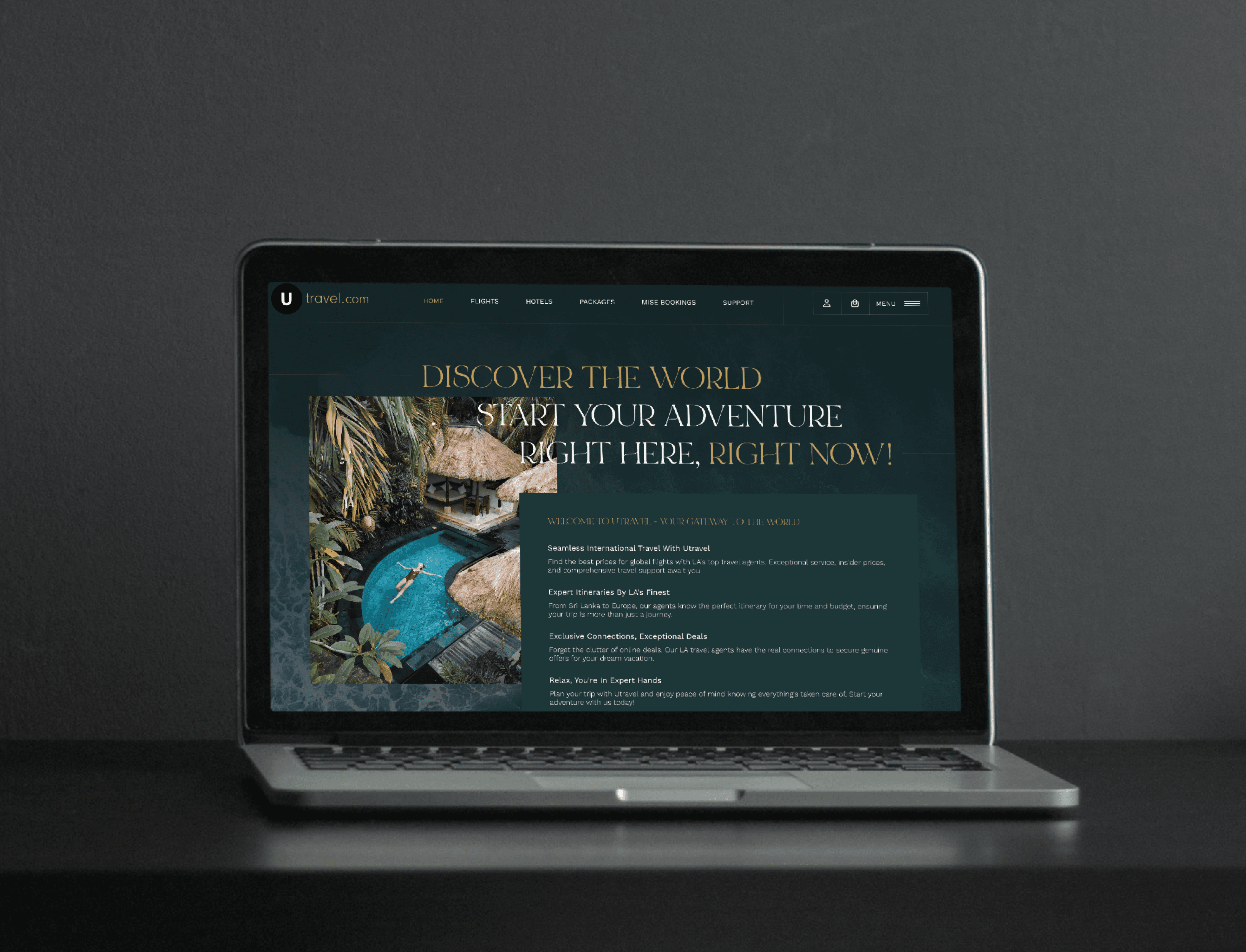
The uTravel website redesign focuses on enhancing the user experience through improved visual clarity, intuitive navigation, and streamlined booking processes. The project aims to transform the website into a user-friendly platform that allows customers to easily find and book their desired travel arrangements.
The Challenge
The existing uTravel website presents a frustrating experience for users. Its cluttered design and overwhelming amount of information create confusion and impede efficient navigation. This makes the process of finding relevant travel options and completing bookings needlessly complicated. Users struggle to locate the information they need quickly, leading to a cumbersome and inefficient booking experience.
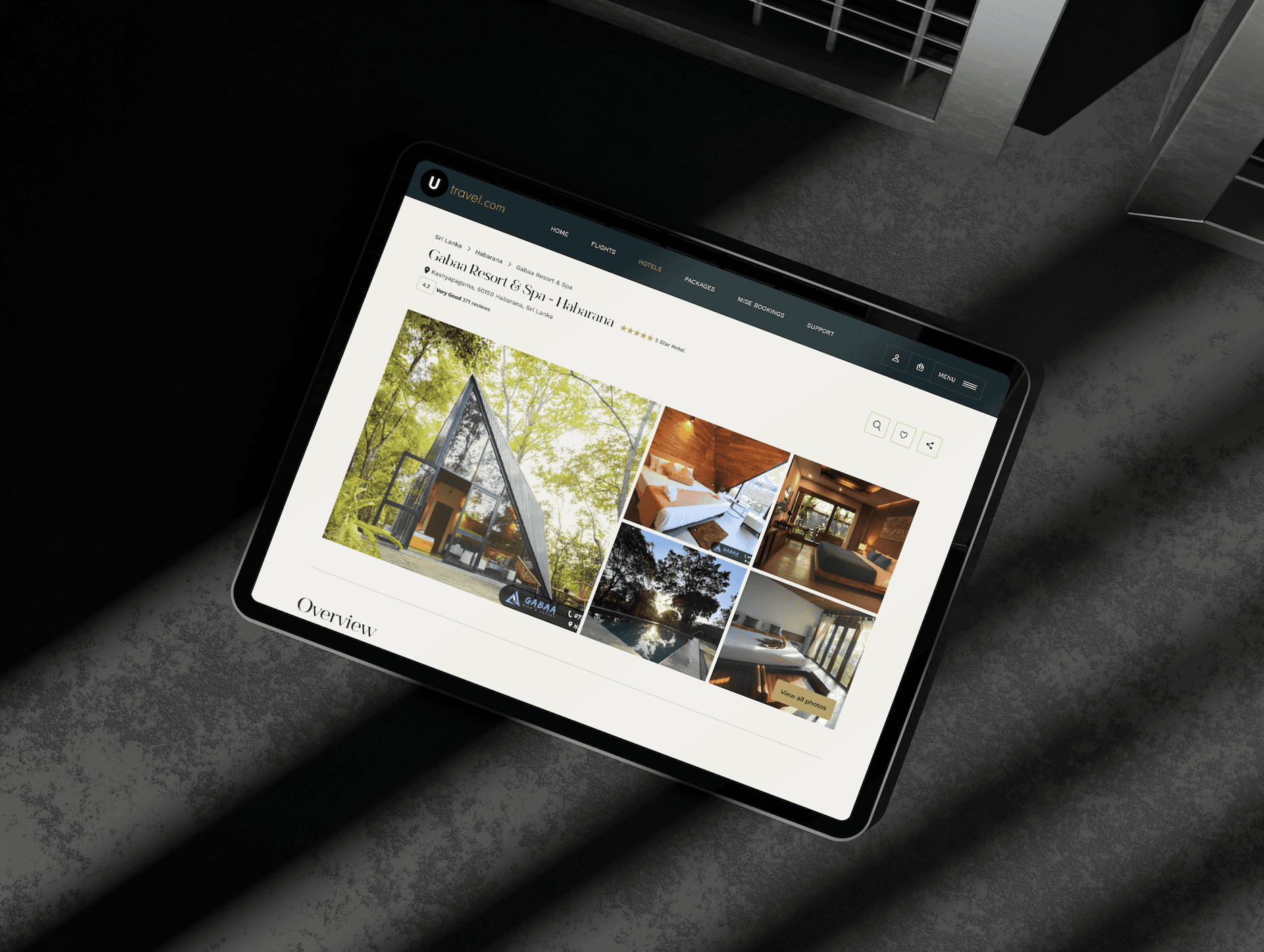
The redesigned uTravel website aims to resolve the frustrations caused by the previous cluttered layout and overwhelming information. It emphasizes a clean, uncluttered design with a focus on visual clarity to guide the user's eye effortlessly through the content. Intuitive navigation and clear calls to action provide a seamless booking experience. Powerful search functionality, paired with refined filtering options, allows users to quickly pinpoint the travel arrangements that match their preferences. Finally, the booking flow itself is streamlined, minimizing potential points of confusion and ensuring a smooth reservation process from start to finish.
Process
My design process,
Define: The design process for the uTravel website redesign began with a comprehensive definition phase. I identified the need to create a user-friendly travel booking platform that addressed the pain points of the existing site. The target audience included both casual and frequent travelers seeking hotel bookings, flight reservations, and travel packages. By understanding the business goal of improving user satisfaction and conversion rates, I set out to design a more intuitive and efficient user experience.
Research: In the research phase, I conducted user interviews and usability testing to gather insights into user behavior and preferences. This was complemented by market research and competitive analysis to understand industry standards and identify opportunities for differentiation. I mapped out customer journeys to visualize the user's path through the site and to identify pain points and areas for improvement. Collaborating with the client was crucial to ensure that the design aligned with their vision and business objectives.
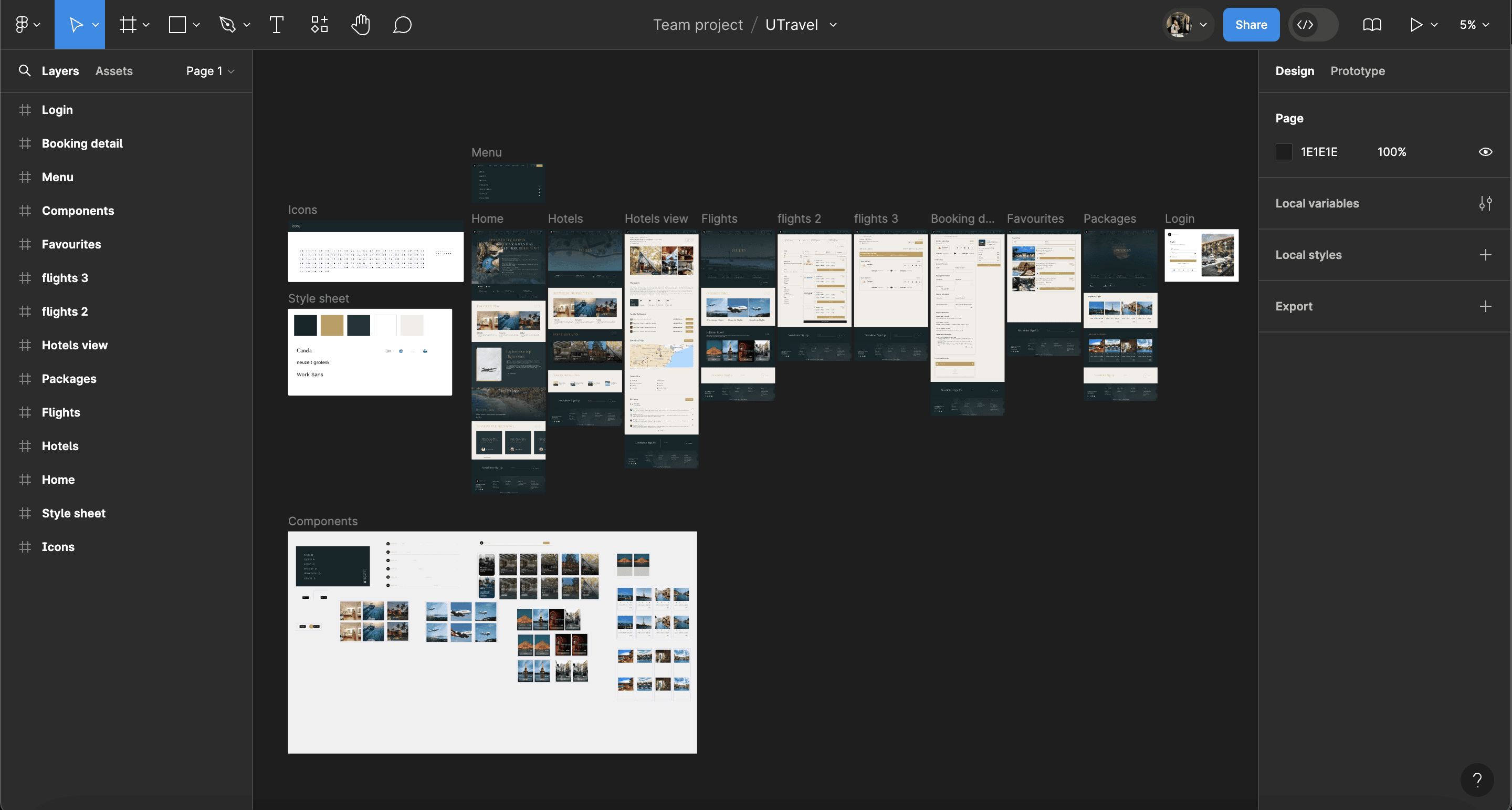
Low fidelity prototyping: The next step involved low-fidelity prototyping. I began with paper sketches to quickly iterate on different layout ideas and design concepts. These sketches were then translated into wireframes using Figma, allowing for a more detailed and structured representation of the website’s architecture. This stage helped in visualizing the placement of key elements and ensuring a logical flow of information.
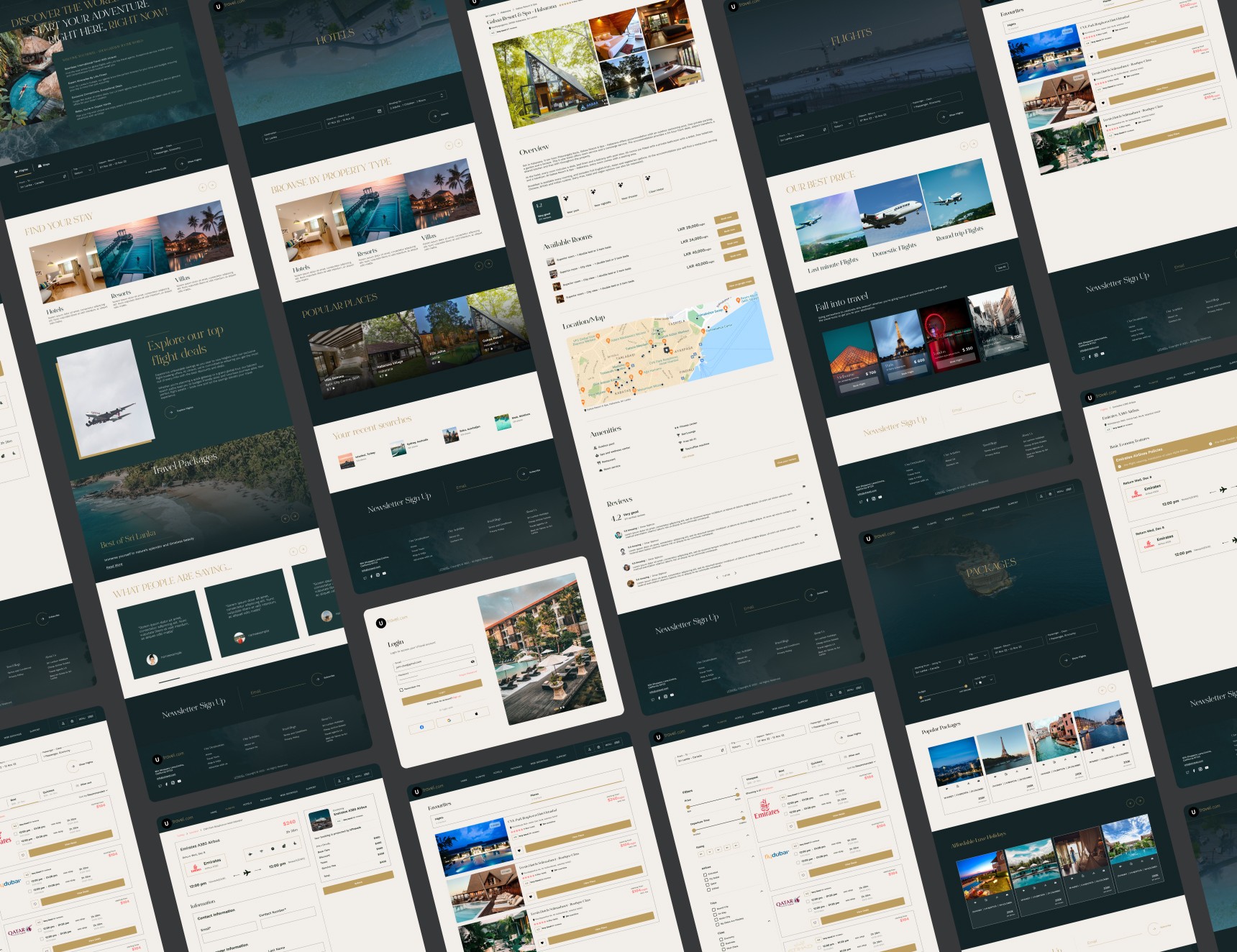
The high-fidelity prototyping: High-fidelity prototyping followed, where I designed detailed and visually engaging screens in Figma. These prototypes included all the visual elements, such as colors, typography, and imagery, to create an aesthetically pleasing and cohesive design. Interactive prototypes were also created to simulate the user experience and to facilitate usability testing.
Testing: Finally, I conducted extensive usability testing to gather feedback on the high-fidelity prototypes. This iterative process allowed me to identify and address any usability issues, ensuring that the final design was user-centric and intuitive. Based on the feedback, I made necessary refinements to enhance the overall user experience, making the booking process seamless and enjoyable.
Key Takeaways
User-Centric Design: The redesign of the uTravel website provided several key takeaways, emphasizing the importance of a user-centric approach. Through extensive research and usability testing, I gained a deeper understanding of user needs and preferences. This empathy-driven design process allowed me to create features that truly resonate with users, ensuring that the final product addressed their pain points effectively.
Iterative Process: The iterative design process proved to be crucial in refining the user experience. By continuously prototyping and testing, I was able to identify and resolve usability issues early on. This approach not only enhanced the overall design but also led to a more polished and efficient final product. The importance of iterative improvement based on user feedback became evident, reinforcing the value of a flexible and responsive design process.
Collaboration: Collaboration with the client and other stakeholders was essential in ensuring the project’s success. Effective communication allowed me to align the design with business goals and user needs, resulting in a product that met both sets of requirements.